
Washing Machine Not Draining: Safe Checks and Next Steps
By OK Appliance Repair · Published · Updated
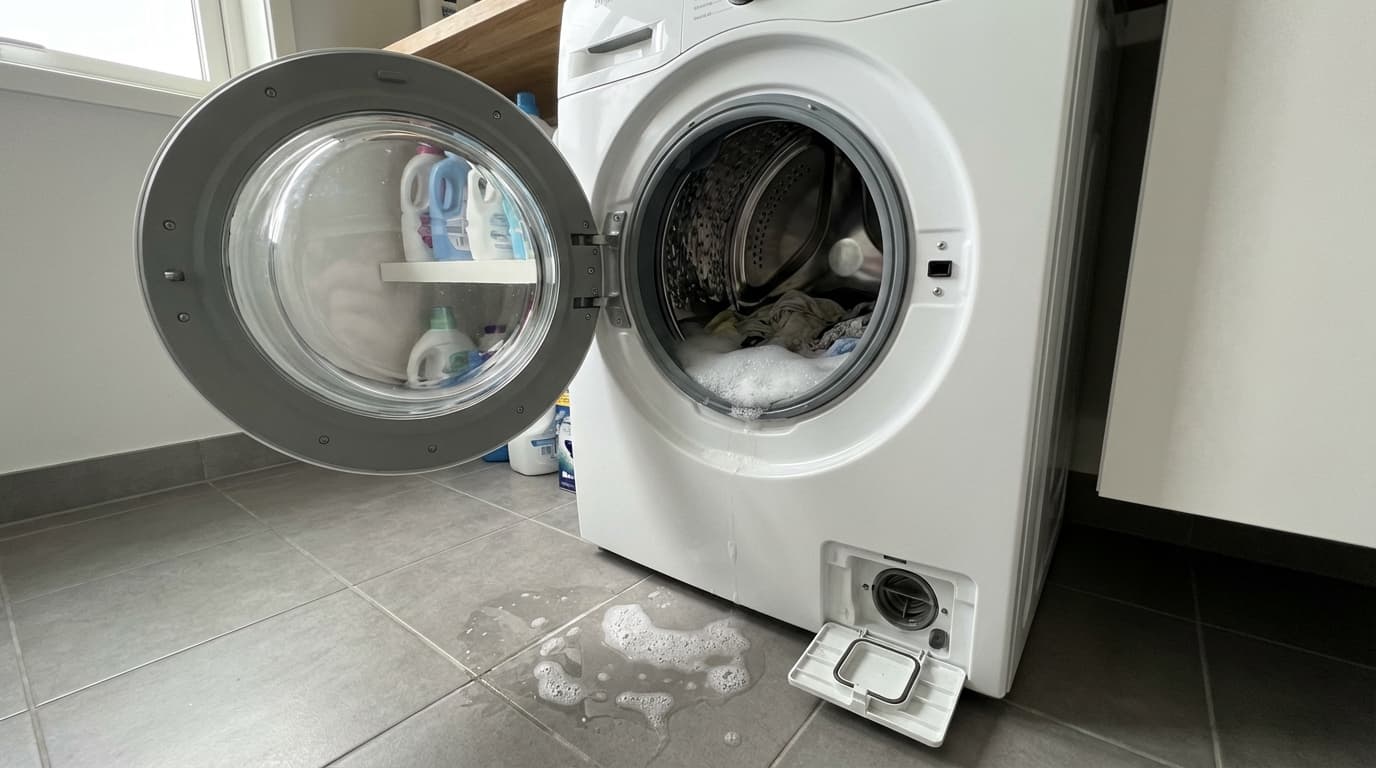
Water still in the washer? Separate a drain problem from a spin problem, record the error, and avoid flooding when checking your machine.
There is water in the washer, the cycle has stopped and the door may still be locked. Leave the door and drain filter closed for now. Start by recording any message on the display. If the drum is empty and only the clothes are wet, read our spin guide instead: that is a different starting point for diagnosis.
Do not force the door or open a full pump filter
Stop if water is leaking onto the floor. Avoid electrical connections in a wet area. Do not force a locked front-load door, tip the machine or unscrew a drain filter while the drum holds water. Hot wash water can also remain inside after a cycle stops. Use only the draining procedure in your model’s manual.
Check the cycle status
GE notes that some top-load models pause normally during a cycle. Check whether the machine has actually stopped or is in a documented pause. Do not manually advance a mechanical timer to make it drain. Record the displayed error before clearing it, and avoid repeated restarts when the same fault returns.
Look at the accessible drain hose
Without moving the washer or disconnecting plumbing, look for an obviously pinched section of hose. If the problem began after installation, ask the installer to check the hose routing and height against the model instructions. There is no single drain-height rule that fits every washer.
Notice whether the household standpipe or sink backs up. Tell us if the sink or standpipe is backing up too. Do not remove a hose from a full machine to experiment: uncontrolled water release can damage the room.
Tell the technician whether the machine is silent, humming or attempting to drain repeatedly. Those observations are useful, but they do not prove a pump is bad. We need to check the machine before recommending a replacement pump.
Prepare for a service call
- Provide the model number, load type and cycle stage where the washer stopped.
- Say whether water is visible and whether it is hot.
- Mention recent installation, plumbing work or previous repairs.
- Describe access: stacked laundry, a tight closet or a washer in a drain pan.
Calling for help? Tell us there is water in the drum before we arrange the visit. Have your ZIP code ready and mention a stacked installation or limited access. Our diagnostic charge is $85, waived if you approve the repair. If the sink or standpipe is backing up too, mention that when you call.
Manufacturer and safety references
These references explain the general care principles discussed above. Use your exact model manual for procedures.
Need help with this appliance?
Explore washer repair in Charlotte and check our service areas.
Call (980) 301-6530