
Washer Won’t Spin? Separate Load Issues From a Fault
By OK Appliance Repair · Published · Updated
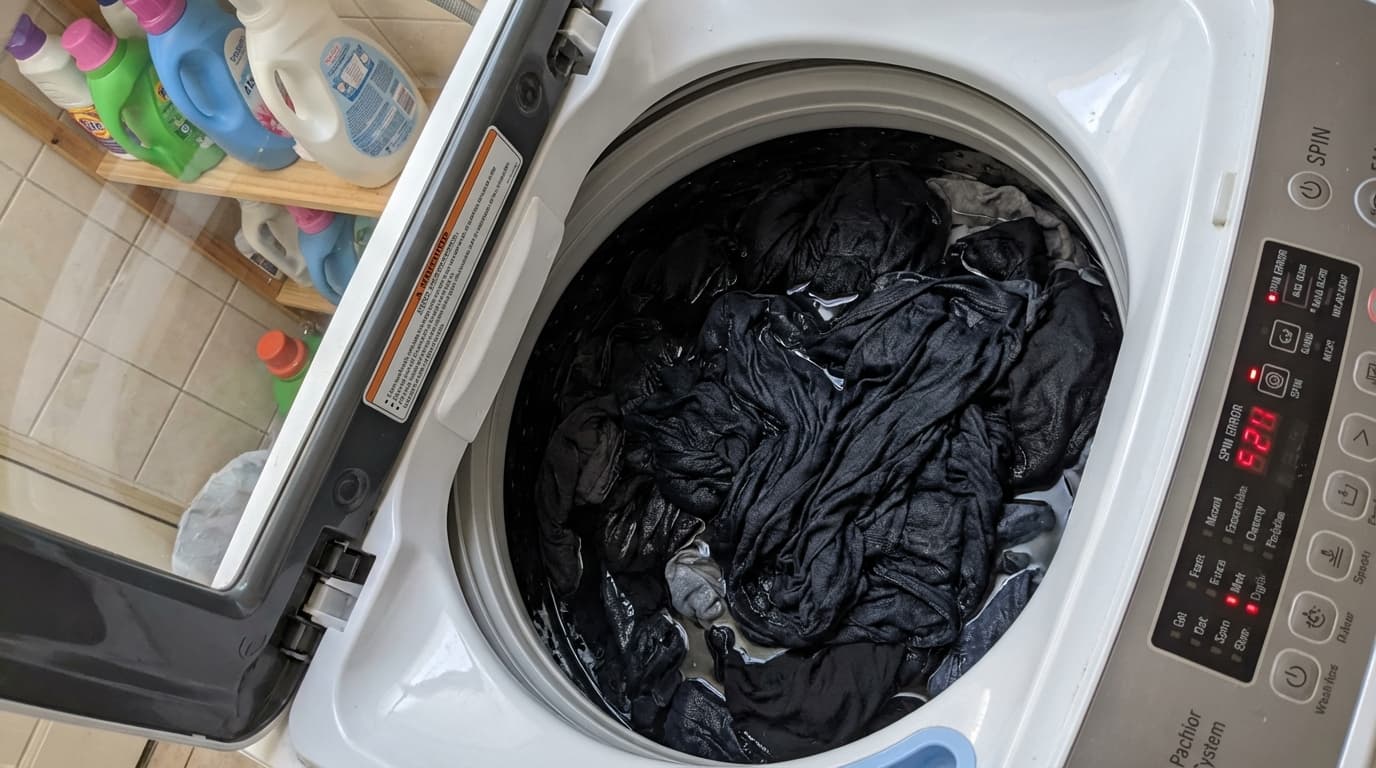
Check the cycle, load and detergent before assuming a motor failure. Learn what information helps diagnose a washer that leaves clothes wet.
You open the washer and find a heavy, soaking-wet load. First, look for water still sitting in the drum. If you see it, start with our draining guide. If the water has gone but the clothes are wet, check the selected spin setting and think about whether this happens with every load or just a bulky item.
Confirm the selected settings
Check the cycle and selected spin setting against the owner's manual. Some settings intentionally use slower spinning. GE explains that slower spin and excess suds can leave more water in clothes. Do not select an aggressive spin program for items whose care instructions prohibit it.
Describe the load
Note whether the problem happens with one heavy item, an ordinary mixed load or every load. If the washer is shaking hard or moving, stop it. Once it has stopped and the door or lid releases normally, follow the manual's guidance on load size and distribution. Never reach into a moving basket.
Look for excess suds
Use the detergent type and measured amount specified for your machine and load. More detergent does not mean better cleaning. If you see persistent foam, note the product and dose for the technician; do not add household chemicals to cancel out the suds.
Do not bypass the door or lid lock
A door or lid that will not lock properly needs attention. Do not tape, bridge or force the interlock to make the machine spin. A displayed lock error is useful information, but the code alone does not establish that the latch is the only component involved.
When the simple checks do not explain it
If ordinary loads still come out wet, arrange a service visit. Record what the washer does: it drains but never speeds up, attempts to spin and stops, or ends the cycle with a code. If safe, write down the sequence rather than restarting the machine repeatedly to capture a video.
Include recent moves or installations, changes in noise and any previous repairs when you contact a service company. A stacked laundry installation may require different access planning from a freestanding top-loader.
You do not need to identify the failed part before calling. Tell us what the washer does at the end of the cycle, what was in the load and whether any water remains. We will discuss availability for your ZIP code. Diagnosis costs $85 and is waived if you proceed with repair.
Manufacturer and safety references
These references explain the general care principles discussed above. Use your exact model manual for procedures.
Need help with this appliance?
Explore washer repair in Charlotte and check our service areas.
Call (980) 301-6530