
Refrigerator Maintenance: Cleaning and Cooling Checks
By OK Appliance Repair · Published · Updated
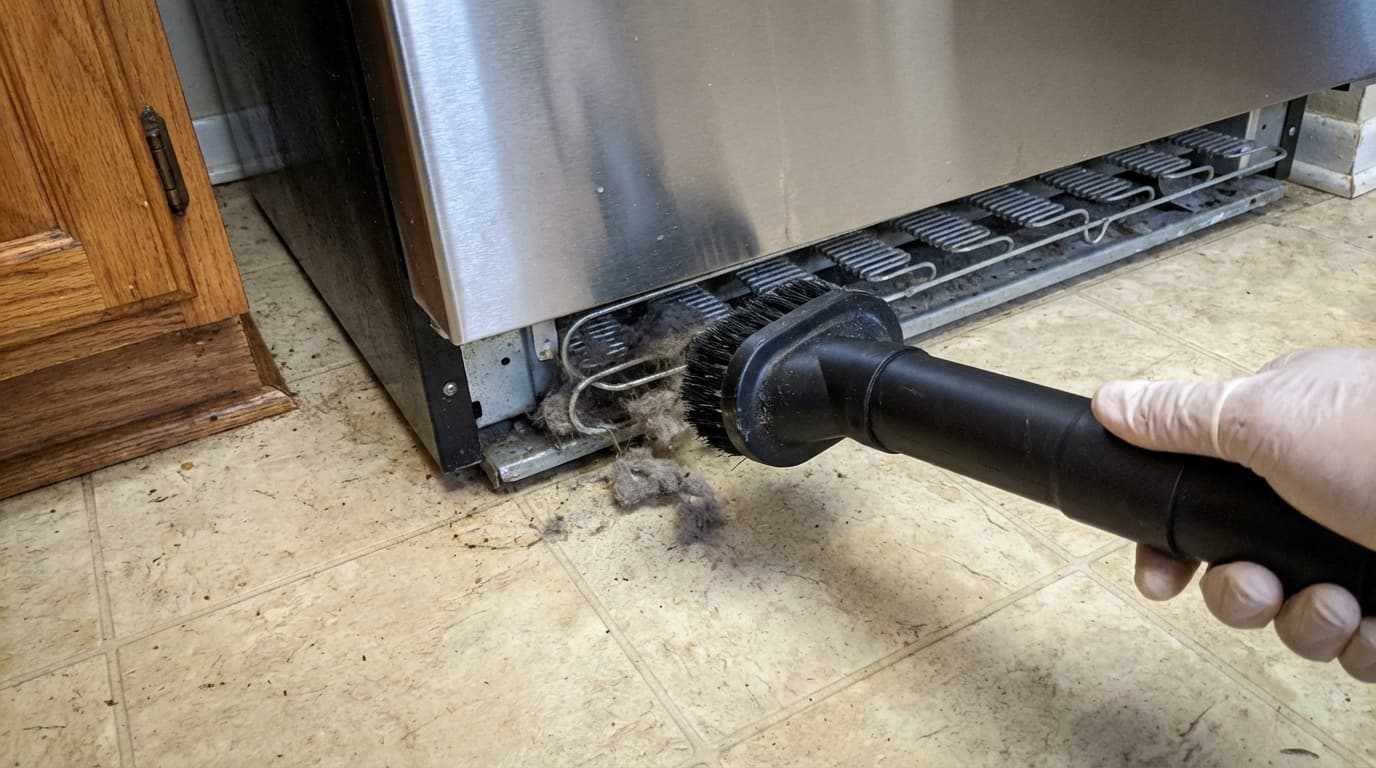
Care for accessible refrigerator surfaces, track cooling changes and use your model manual before cleaning coils or moving the appliance.
A drawer that will not slide all the way in can keep a refrigerator door from closing. A new noise or warmer compartment deserves attention too, even when the shelves look clean. Use this guide for routine care and for keeping track of changes. If cooling has stopped, protect perishable food and follow current food-safety guidance while you arrange help.
Keep track of what has changed
Notice whether one compartment or both seem warmer, whether a door no longer closes normally and whether you hear a new sound. If you have an appliance thermometer, record the reading and when it was taken. Mention a recent power interruption, move or unusually long door opening when asking for service.
Clean accessible surfaces
Whirlpool recommends checking the manual for suitable cleaning products. Protect food while cleaning, use products permitted for the interior and take care with removable shelves and drawers. Avoid spraying controls, electrical openings or other areas not intended for wet cleaning.
Look at door closing and loading
Check whether a container or drawer is preventing the door from closing fully. Wipe accessible seal surfaces according to the care instructions; do not pull the gasket loose to clean behind it. Follow the model's loading instructions so items do not block designated vents.
Do not assume every condenser needs the same treatment
Locate the maintenance section of your manual before removing a grille or reaching under the cabinet. Some components are inaccessible to owners or have different service requirements. Do not move a built-in refrigerator or disturb water lines and electrical connections simply because a generic article recommends vacuuming coils.
Use the correct filter procedure
For a model with a user-replaceable water filter, follow its specified part, installation and flushing instructions. Record when it was changed and note any leak afterward. Do not force a filter that does not fit or assume a filter replacement will correct a cooling fault.
When to request repair
- Cooling does not recover as expected under the model's instructions.
- A door seal is damaged or the door cannot close normally.
- Water continues to appear without a clear, safely corrected spill.
- A persistent new noise or error accompanies a change in operation.
Limit unnecessary door opening while arranging help and protect perishable food. Do not chip ice with sharp tools, heat the cabinet with an open flame or touch refrigerant tubing.
When you call, tell us which compartment is warm and share a thermometer reading if you have one. Mention a built-in installation so we can discuss access. Diagnosis is $85, waived if you proceed with repair. Once we know what is wrong, you can review the price before deciding whether to repair the refrigerator.
Manufacturer and safety references
These references explain the general care principles discussed above. Use your exact model manual for procedures.
Need help with this appliance?
Explore refrigerator repair in Charlotte and check our service areas.
Call (980) 301-6530