
How to Clean a Dryer Without Damaging It
By OK Appliance Repair · Published · Updated
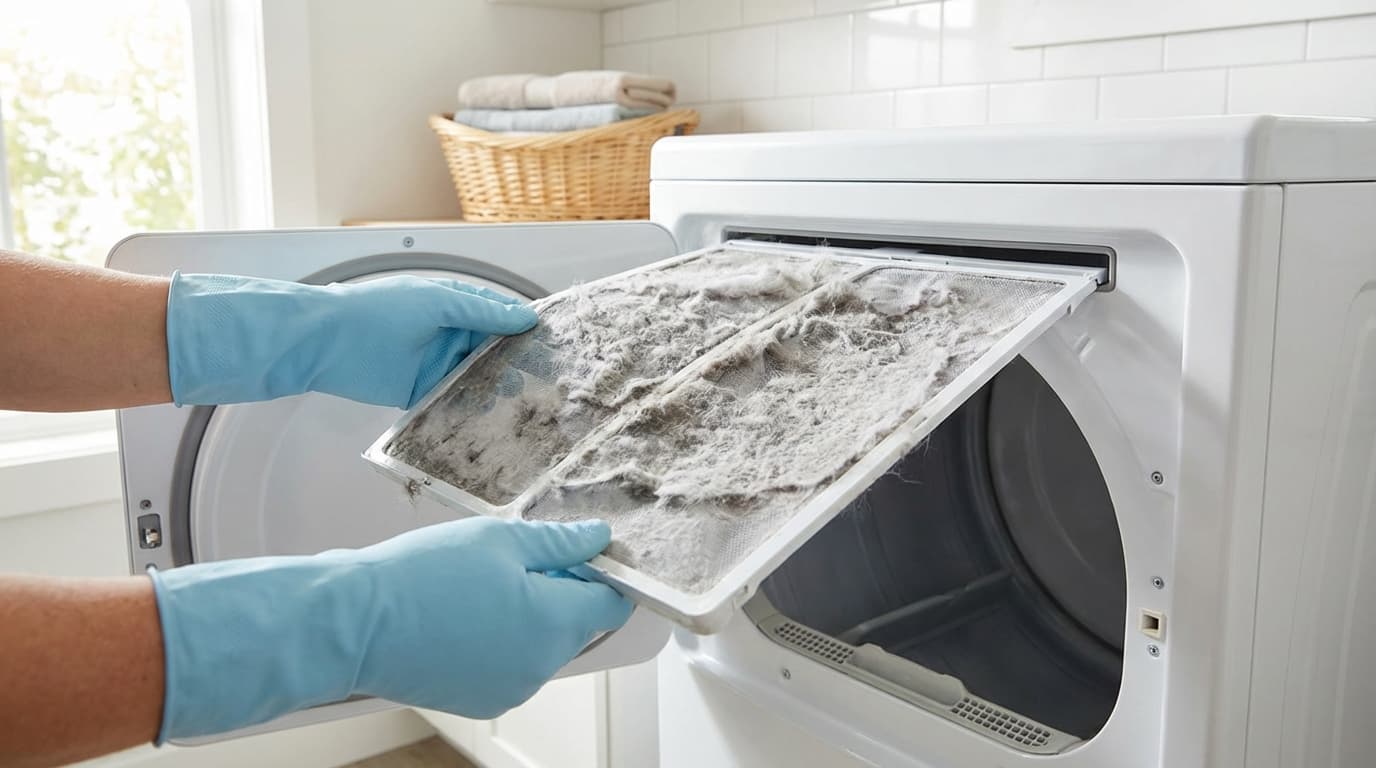
A practical dryer care plan for lint screens, visible surfaces and model-specific maintenance, with clear limits for exhaust and internal cleaning.
Start with the lint screen and your dryer's care instructions. The rest of the cleaning routine depends on the machine: a vented dryer has an exhaust path, while a heat-pump model may have filters and other care steps of its own. You should not have to dismantle the cabinet to do routine owner maintenance.
After each load
Remove lint from the screen as directed by the manual. Whirlpool advises cleaning the screen after use and fully drying it after any permitted deep cleaning. Do not operate the dryer with the screen missing, damaged or installed incorrectly. If the screen no longer fits, arrange replacement using the model number.
When the machine is off and cool
Follow the manual before cleaning the drum or accessible surfaces. Remove forgotten items and visible debris without reaching into openings or disassembling the cabinet. Use only products appropriate for the surface and allow it to dry as instructed. Do not spray liquid onto controls or electrical connections.
Keep a vented exhaust path in mind
Lint can collect beyond the screen. The U.S. Fire Administration advises attention to the dryer venting system and having appropriate maintenance performed. A duct hidden in a wall, an inaccessible outdoor termination or a stacked installation may require professional access.
Record when the exhaust was checked and any recurring increase in drying time. Do not use the dryer with the exhaust disconnected into the room. Moving a gas dryer or disturbing its connection creates a separate service task; do not do it merely to reach lint.
For heat-pump and condenser models
Use the cleaning schedule and access instructions for the specific model. A visible lower panel is not permission to remove or rinse the assembly behind it. Check whether the manual identifies an owner-cleanable filter, a collection tank or a self-cleaning component.
Cleaning is not a cure for every symptom
Stop use for a burning smell, unusual overheating, smoke or repeated breaker trips. Repeated drying cycles can conceal a problem instead of resolving it. If performance does not return after the maintenance allowed by the manual, ask for diagnosis.
If clothes still take too long to dry, tell us what you cleaned and whether the dryer is vented or ventless. Mention a stacked unit or an exhaust outlet you cannot reach. We offer dryer repair and dryer vent cleaning; ask which service fits the problem and confirm the scope and price before booking.
Manufacturer and safety references
These references explain the general care principles discussed above. Use your exact model manual for procedures.
Need help with this appliance?
Explore dryer repair in Charlotte and check our service areas.
Call (980) 301-6530